Storm & hail damage
Cracked, dented, or punctured panels from hail, wind-driven debris, or fallen limbs. We document the damage pattern to support an insurance claim and coordinate with your adjuster if needed.
Insurance documentation includedStorm damage, impact cracks, rot behind the cladding, and color-matched replacement for every major manufacturer. We open the wall, look at what is actually happening, and repair the whole assembly — not just the visible surface.
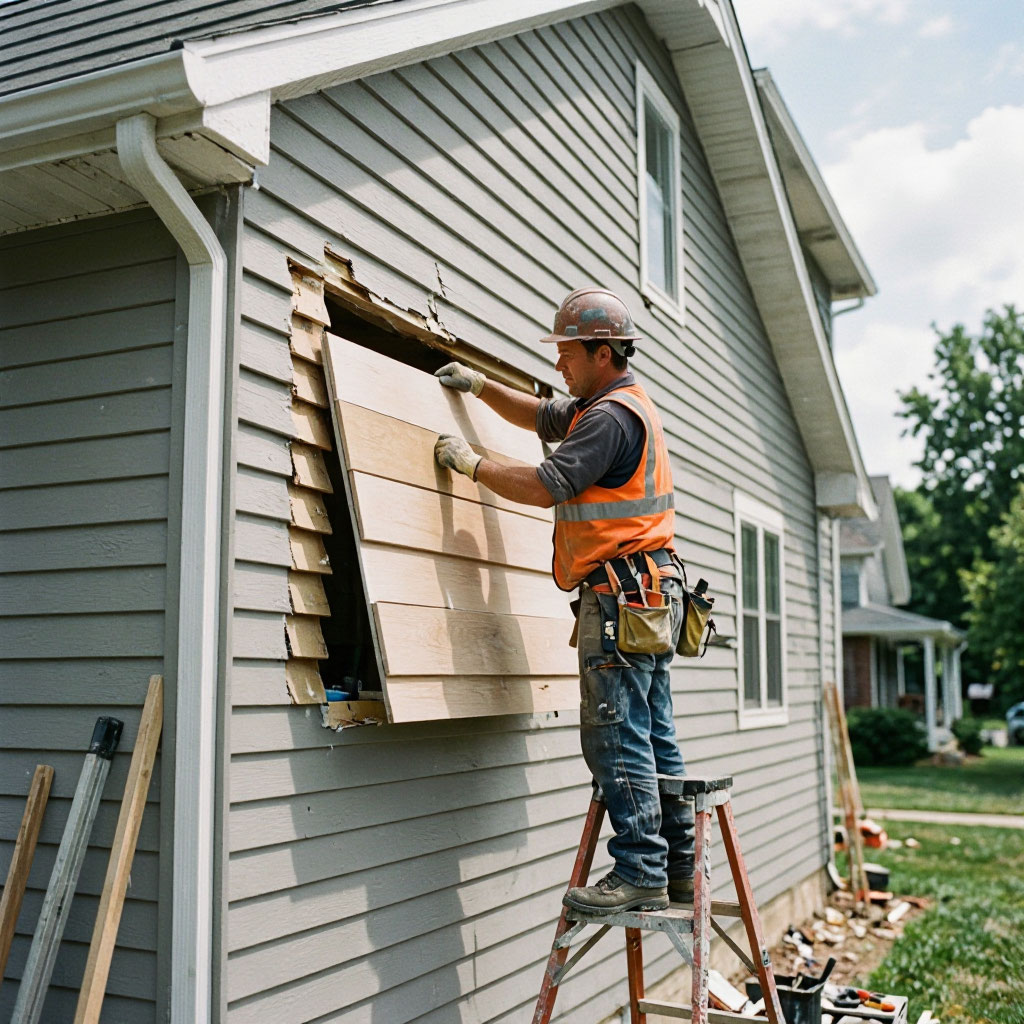
Most repair calls fall into one of the categories below. If yours does not fit, call and describe what you are seeing — we have seen it before.
Cracked, dented, or punctured panels from hail, wind-driven debris, or fallen limbs. We document the damage pattern to support an insurance claim and coordinate with your adjuster if needed.
Insurance documentation includedThe panel looks fine from the outside, but a soft spot or discoloration near a corner tells another story. We open the wall, replace the failed sheathing, treat the surrounding framing, and reinstall the cladding.
Substrate inspection includedLadder drops, mower throws, bicycle impacts, and the classic backup-into-the-garage crack. We source color-matched panels from the original manufacturer wherever possible, or a close visual match if the line is discontinued.
Color match guaranteedPanels that have worked their way loose from failed fasteners or an improperly seated starter strip. We resecure to the sheathing with correct fasteners and check that the panel above it is not also failing.
Fastener pattern correctedWater coming in around a window or door frame usually means the head flashing or sill pan has failed. We remove the trim, replace the flashing, re-set the trim, and re-caulk the assembly to manufacturer spec.
Flashing replacement includedCosmetic but persistent — paint chalking on older fiber cement, or panel fading on cheaper vinyl. We can repair the affected section or recommend full replacement if the material has reached end of life.
Repair or replace optionA typical repair visit is finished in a single day. Larger storm damage or hidden substrate repair runs two to four days.
We walk the affected area with you, photograph every damaged panel, and probe the substrate behind the worst section. No estimate over the phone — repairs are always quoted after we see them.
Same weekWe identify the original manufacturer from the panel profile and any receipt on file, order matching replacements, and confirm the color and profile with you before installation day.
3–7 daysFailed panels removed, substrate repaired if needed, new flashing set, and matched panels installed with correct fastening. Caulk line re-run along the repair boundary.
1–4 daysBefore-and-after photos added to the property file. Repair covered under the same 12-year workmanship warranty as a full installation. Manufacturer coverage applies to the replacement panels.
Same dayStorm damage claims are won or lost on documentation. We prepare the same file your adjuster needs to approve the repair — dated photos, line-item scope, material identification, and a written damage narrative.
Start a claim assessmentEvery panel photographed with a date stamp, close-up detail of the impact point, and wide shot showing the damage pattern relative to the roofline and prevailing storm direction.
Written in the same format adjusters use — quantity, unit cost, labor, materials, and disposal, itemized by line. No lump-sum estimate that the adjuster will discount line by line.
We meet your adjuster at the property, walk the damage together, and answer technical questions on the spot. Most claims resolve in one visit when the contractor is present.
If the initial adjuster scope comes up short — hidden substrate damage, discontinued material, code-required upgrades — we prepare the supplement with the documentation to support it.
We do not waive deductibles, absorb them, or offer cash-back schemes. That is insurance fraud and it will void your policy. We invoice you for the deductible; the carrier pays the rest.
An improperly matched repair is obvious from the street — a slightly different shade, a slightly different profile, a seam that reads as a patch. We keep physical samples and profile data for the major manufacturers so the repaired section reads as original siding.
Repairs are priced by the visit plus the cost of affected area. The numbers below reflect completed jobs in the Charlotte metro in 2026.
All repair work is quoted after on-site assessment. Emergency tarping is available for storm damage where water is actively entering the building. The $240 – $480 tarping fee is credited against the final repair invoice if you proceed with us.
Yes. Single-panel repairs are common and run $480 – $850 depending on access. We always check the panels above and below the damaged section — if the panel above is also loose or compromised, repairing just one creates a problem the following month.
Push on the wall in the area below the suspect panel. A soft, spongy feel means the sheathing behind it has failed. Other signs: a persistent musty smell near the wall, water stains on interior drywall, or ants and other insects around the base of the wall. Any of these mean it is time to open the wall and look.
We keep physical samples and profile data for the major manufacturers, and we can usually source from regional distributors even if the local supply house has discontinued the line. If an exact match is not possible, we show you the closest options in daylight before ordering — never a surprise after the panel is up.
Yes. We document damage in the format adjusters expect, provide a line-item scope that supports the claim, and can meet your adjuster on site. We do not waive deductibles — that is insurance fraud. We invoice you for the deductible and the carrier pays the balance directly.
During a storm event we run a dedicated emergency response crew and target a 48-hour response window for tarping and containment. Full repair scheduling depends on the volume of claims in the area — usually within five to ten business days of the assessment.
Yes. Repair work is covered under the same 12-year workmanship warranty on installation labor — fastening, flashing, sealing, and trim detailing. The replacement panels themselves carry manufacturer coverage, which we register in your name.
Sometimes. A hairline crack in a vinyl panel is not urgent unless it is below a window or at a corner where water can track behind it. A crack in fiber cement, or any crack that has opened the panel surface, should be repaired within a few weeks — a small exposed edge becomes a large moisture problem in one winter.
A project manager assesses the damage, photographs every affected area, and sends a written itemized repair proposal within two business days. Storm claims documented the same day.